
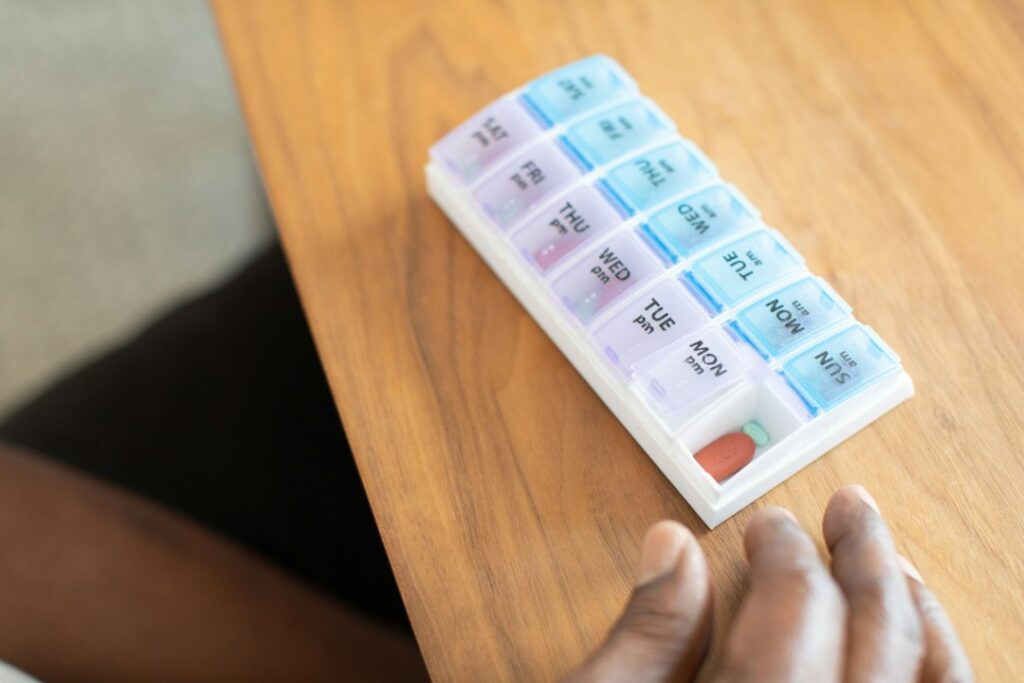
What does medication management include?
In California, PA, assisted living medication management usually means more than handing someone a pill. It can include reviewing medication orders, storing medications securely, reminding residents when doses are due, administering medications, recording each dose, and reporting problems to the appropriate prescriber or designated family contact.
The exact level of help depends on a resident’s assessment and support plan. Some residents may safely manage medications in their own apartment with limited reminders. Others may need staff to store, prepare, and administer every dose.
Medication management commonly covers:
- Prescription medications
- Over-the-counter medications
- Eye, ear, and nose drops
- Topical medications
- Insulin or other injections when staff meet required training standards
- As-needed medications, often called PRN medications
- Medication changes after a hospital visit or medical appointment
Assisted living is not the same as a hospital. Staff generally follow current prescriber instructions rather than independently diagnosing conditions, changing doses, or deciding that a medication is no longer needed.
Can residents manage their own medications?
Yes. Pennsylvania assisted living residences may support self-administration when a resident can do so safely. The resident may keep medication in the living unit if the residence’s assessment, policies, and support plan allow it.
Self-administration may involve different levels of independence. A resident might:
- Take medications without help
- Need reminders about the schedule
- Need medication stored in a secure location
- Need staff to bring the medication at the prescribed time
- Need help opening a container or removing medication from packaging
There is an important distinction between a simple reminder and medication administration. Reminding a resident that it is time for a dose is different from removing the medication from its container, placing it in the resident’s hand, or giving it by another route. Activities that involve handling or administering the dose may be subject to Pennsylvania training and authorization requirements.
A resident’s ability can also change. Memory loss, vision problems, arthritis, weakness, or a new medication may make a previously independent routine unsafe. The support plan should be updated when the resident’s needs change.
How are medications stored and prepared?
Medications that staff manage are generally kept in a secured storage area with limited access. The purpose is to prevent mix-ups, unauthorized use, loss, and accidental access by residents or visitors.
Prescription medications should remain in properly labeled original containers or approved packaging. Labels typically identify the resident, medication, strength, directions, prescriber, and other information needed for safe administration. Over-the-counter medications also need clear identification when they are maintained by the residence.
Before a dose is given, staff compare the medication with the current order and the resident’s medication record. Depending on the residence’s system, medications may be supplied in individually organized packages, but the underlying requirements remain the same: the right medication must reach the right resident in the right amount, by the right route, at the right time.
Seasonal conditions can create practical concerns for area households. During winter weather, delayed transportation, road conditions, or pharmacy closures may affect refills and deliveries. Families should ask how the residence handles urgent medication needs and maintains an adequate supply when regular access is interrupted.
Who is allowed to administer medication?
Pennsylvania permits certain trained assisted living staff to administer specific medications. A staff member who completes the required Department-approved medication administration training and competency testing may administer oral, topical, eye, nose, and ear drop medications, as well as certain epinephrine injections.
Insulin administration has additional requirements, including diabetes education. Not every staff member is authorized to administer every type of medication. Injectable medications, complex treatments, controlled substances, and other higher-risk therapies may require different qualifications or involvement from licensed health care professionals.
Residents and families can reasonably ask:
- Which staff members administer medications?
- What training and competency checks have they completed?
- Who is available during evenings, weekends, and emergencies?
- How are controlled substances secured and counted?
- What happens if a medication requires nursing or outside health care services?
The residence’s written policies should explain how medication administration is handled and what services are included in the resident’s agreement.
How are medication records maintained?
A medication record documents what a resident is supposed to receive and what actually happened. Pennsylvania requirements include recording details such as the medication name, strength, dosage, route, frequency, administration time, special precautions, and the identity of the staff member who administered it.
The actual administration time and staff identification should be recorded when the dose is given. A blank entry should not simply be assumed to mean that the medication was taken.
Records also help staff track:
- Missed or delayed doses
- Refused medications
- New prescriptions
- Discontinued medications
- Dose changes
- As-needed medication and the reason it was given
- Possible medication errors
- Suspected adverse reactions
Residents have the right to question or refuse a medication if they believe there may be an error. A refusal should be documented, and the prescriber generally must be notified within the required timeframe unless different instructions apply.
What happens when a medication changes?

A medication change should come from an authorized prescriber and be documented in writing, except for limited situations involving properly authorized telephone or emergency orders. The medication record should be updated promptly after the residence receives the change.
Changes commonly occur after:
- A hospital discharge
- A new diagnosis
- A fall or change in blood pressure
- A pharmacy review
- A medical appointment
- A change in kidney function, appetite, sleep, or mood
Families can help by providing complete and current information about medications prescribed outside the residence. That includes medications from specialists, supplements, vitamins, inhalers, creams, and occasional pain or cold remedies. Leaving out a nonprescription product can create duplication or interaction risks.
After a hospital stay, it is especially useful to compare the discharge list with the residence’s current medication record. A list that looks different does not automatically mean the change is wrong, but it should be clarified before the resident resumes the routine.
What happens if a dose is missed or an error occurs?
A medication error may include giving the wrong medication, wrong dose, wrong route, wrong resident, or wrong time, as well as failing to give a prescribed dose. The response should focus first on the resident’s safety.
The residence should immediately report the error to the resident, designated person, and prescriber, document what happened, record the prescriber’s response, and identify steps to reduce the chance of recurrence. A suspected adverse reaction requires prompt medical consultation or emergency treatment, depending on the situation.
Residents or family members should ask for a clear explanation of:
- What medication was involved
- What dose was given or missed
- When the error was discovered
- Who was notified
- What monitoring is needed
- What corrective action will be taken
Questions to ask before move-in
Medication policies can differ even when residences operate under the same state rules. Before a move, residents and families should ask whether the residence:
- Provides reminders, administration, or both
- Allows medication storage in a resident’s living unit
- Uses pharmacy packaging or another organizing system
- Manages insulin and other injections
- Handles PRN medications
- Provides medication reconciliation after hospital visits
- Notifies families about refusals, errors, and adverse reactions
- Has medication coverage overnight and during severe weather
- Explains medication-related charges in writing
Good medication management preserves as much independence as possible while adding the level of supervision needed for safety. The most reliable system is one that keeps orders current, uses trained staff, documents each dose accurately, responds quickly to problems, and includes the resident in decisions about daily care.
